Decoding Derelict Gems: A Global Guide to Acquiring Abandoned Architectural Wonders
Treat an abandoned building as a research and permission challenge before treating it as a purchase. Document its history, verify who controls it and…
Strange History6 min readPublished 9 November 2026
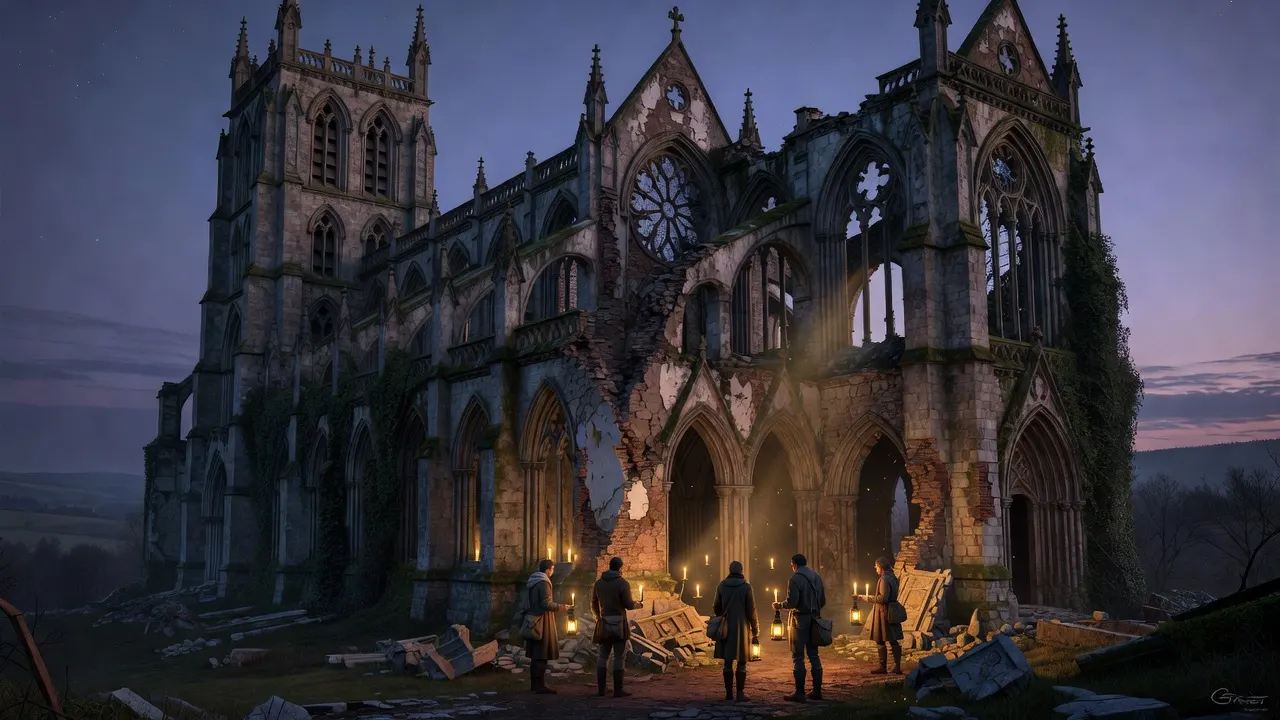
Treat an abandoned building as a research and permission challenge before treating it as a purchase. Document its history, verify who controls it and whether a lawful route to access or acquisition exists, then assess its condition and possible future use with qualified help. Public maps and photographs can guide research, but do not establish ownership or permission.
Key facts
- A global survey describes disused factories, amusement parks, villages, power plants, shipyards, military bases, cooling towers and hotel resorts.
- LostFoundations says its community database documents abandoned sites across Europe, North America and elsewhere.
- SearchQuests describes using field reports, photographs, spatial data, historical maps and blueprints to document sites.
- ArchDaily notes that abandoned buildings can result from economic shifts, disasters, regime changes or incompetence.
Abandonment is a starting clue, not a title deed
Abandonment describes a building’s apparent condition, not who owns it or what a visitor may do there. The source material ranges from derelict factories and empty resorts to military sites and villages, but does not provide ownership records or acquisition procedures for any property. A photograph or map pin is therefore a lead for investigation, not proof that the site is available to buy.
Start with the building’s identity and its documented history. Search for its former use, known name, location and any surviving plans or images. SearchQuests describes cross-referencing discoveries with historical maps and blueprints, while its platform accepts field reports, spatial data and photographs. These records can help you ask sharper questions, though they cannot replace evidence from the relevant owner or land records.
Build a record that separates confirmed details from speculation. Note where each image or claim came from, and leave gaps marked as unknown rather than filling them with a plausible story. Community databases can help locate forgotten sites: LostFoundations says it documents military bunkers, industrial factories, hospitals, châteaux and ruins across several regions. Use that breadth to discover possibilities, not to assume a listing represents a sale opportunity.
The reason for abandonment may matter to future use. ArchDaily identifies economic shifts, disasters, regime changes and incompetence among causes of evacuation. Treat each as a question to investigate. A compelling façade cannot tell you what happened inside, what remains, or what obligations may accompany the land.
Document the site without crossing boundaries
Exploration and acquisition are different activities. LostFoundations defines urban exploration as recreational exploration of abandoned structures and says its primary objective is documenting, photographing and appreciating aesthetic and historical value. That description does not grant access rights. Avoid entering a building unless you have clear permission; record what you can learn from lawful sources and viewpoints.
Make documentation useful to future assessment. Keep a consistent set of notes on visible features, the surrounding landscape, signs of alteration and the source of each observation. SearchQuests presents field reports, spatial information and photographic evidence as documentation tools. Add uncertainty rather than presenting an unverified detail as fact. A carefully labelled unknown can prevent a mistaken assumption from shaping an expensive decision.
Use digital maps as research aids, not as substitutes for inspection or legal checks. LostFoundations describes interactive 3D views, terrain elevation and offline-ready caching among its tools. Such features may help you understand a site’s setting and prepare questions. They do not establish the building’s condition, boundaries, ownership or permission to visit. Confirm each issue through the appropriate local records and professionals before acting.
Acquisition depends on evidence and a workable plan
Before pursuing a purchase, establish whether there is a willing and authorised seller. The available sources describe documentation projects and examples of abandoned architecture, but they do not list properties for sale, prices, sellers or transaction rules. A database entry should therefore prompt an ownership enquiry, not an offer. Use the relevant local property records and qualified legal advice to determine who can make decisions about the site.
Then test the building as a practical project, not just an architectural image. Ask a qualified surveyor and relevant specialists to inspect it, identify urgent risks and outline what evidence remains missing. The source material does not provide building-condition findings for specific properties, so treat every physical assumption as unconfirmed until assessed. Keep inspection, legal research and design ideas separate; each answers a different question.
Next, define a possible use that respects what makes the place significant. ArchDaily describes public and designer interest in abandoned architecture, while LostFoundations frames documentation as a way to preserve historical value. Interest alone does not make a scheme viable. Ask local planning and heritage specialists what changes may be possible, then compare those answers with the building’s condition and your resources.
Keep a decision file with source links, unanswered questions, professional findings and the reason for each next step. This makes it easier to pause when evidence conflicts or an important point remains unclear. A derelict landmark may reward patient research, but its appeal should never be treated as evidence that purchase, access or restoration will be straightforward.
What this means for you?
If you are a reader who has found a striking abandoned building online, begin by deciding what you actually want: a story to document, a lawful visit, or a property to acquire. Those goals require different evidence. A photograph may support your interest in the architecture, but it cannot answer whether a seller exists or whether a future use is possible.
For a potential acquisition, make a short due-diligence file before spending money on design ideas. Record the source of the lead, the building’s stated identity, any historic material you can verify, and the questions still open. Seek confirmation of ownership and authority to sell through appropriate local channels. Ask a property lawyer and building professional to guide checks that depend on local law or the structure itself. The supplied sources do not set out those rules, so do not assume one country’s process applies elsewhere.
Keep a separate note of what you can see lawfully. Use public information, permitted viewpoints and documented material; do not treat curiosity as permission to enter. Community documentation can help preserve knowledge, and the sources describe platforms for recording photographs, field reports and historical significance. Be clear about what is observed and what is only a theory.
What to do now?
- Choose your goal. Decide whether you want to research, document, visit with permission or pursue acquisition. Write down what evidence each goal needs, so an attractive image does not push you into a different project.
- Trace the lead. Search for the building’s name, former use and historical material. Compare sources and label unverified claims. Documentation projects describe cross-referencing findings with historical maps and blueprints.
- Check authority. Before discussing a purchase, use appropriate local records and qualified legal advice to identify who controls the property and whether they can sell it. Do not infer availability from an online map or photograph.
- Arrange lawful assessment. Get permission before any site visit. Ask qualified building professionals to assess condition and identify what further checks are needed; keep their findings distinct from your own observations.
- Test the proposed use. Discuss planning and heritage questions with relevant local specialists. Proceed only when ownership, access, condition and a workable route are supported by evidence.
Sources
- www.bbc.com/culture/article/20240806-12-of-the-worlds-most-fascinating-abandoned-buildings
- lostfoundations.org
- searchquests.com/architectural-anomalies-and-the-documentation-of-abandoned-heritage-sites
- www.archdaily.com/tag/abandoned-architecture
About this page
Written with AI assistance from the sources listed above, then checked by automated fact, source, repetition and quality checks before publishing.
Facts and links checked on 9 November 2026. Summarises the sources linked above; check the linked source for the latest version.
How we researched this: we compiled this guide from the official and independent sources listed above, and checked the facts on the date shown. Our editorial policy explains how we choose and check sources.